GSG Impact Summit 2027
2nd March 2027 | 09:00 CET | The Hague, the Netherlands


A unique partnership between the Ministry of Foreign Affairs of Japan and GSG Impact has been working to strengthen impact ecosystems and mobilise capital for small and medium enterprises (SMEs) in Africa.
By removing structural barriers to impact investing, fostering SME access to finance, and supporting long-term ecosystem development, the initiative is advancing inclusive, resilient, and climate-conscious economies.
Leveraging GSG Impact’s global network of National Partners, and Japan’s leadership in sustainable development, it is catalysing systemic change, and attracting domestic and international private capital to the continent’s underserved SME sector – a key driver of growth, employment, and innovation.
The work has placed a particular focus on six countries – Burkina Faso, Cote d’Ivoire, Ethiopia, Ghana, Senegal, and Zambia – where SMEs play a pivotal role in economic growth and job creation, but face persistent financing barriers.
While development finance institutions (DFIs) try to bridge SMEs’ US$5 trillion annual financing gap, direct funding remains insufficient. Based on 13 case studies, How to maximise private capital flows to SMEs shows that combining financing with targeted technical assistance, governance support, and strong intermediary alignment can catalyse “secondary mobilisation” – domestic private capital that is unlocked following DFI intervention.
The initiative is on track to mobilise more than US$500m in investments for SMEs over the next five years, thanks to the launches of Ghana’sUS$75m Ci-Gaba, the first private fund of funds domiciled in West Africa, and Zambia’s Small Business Growth Initiative, where the central bank has injected US$180m as a credit guarantee facility.
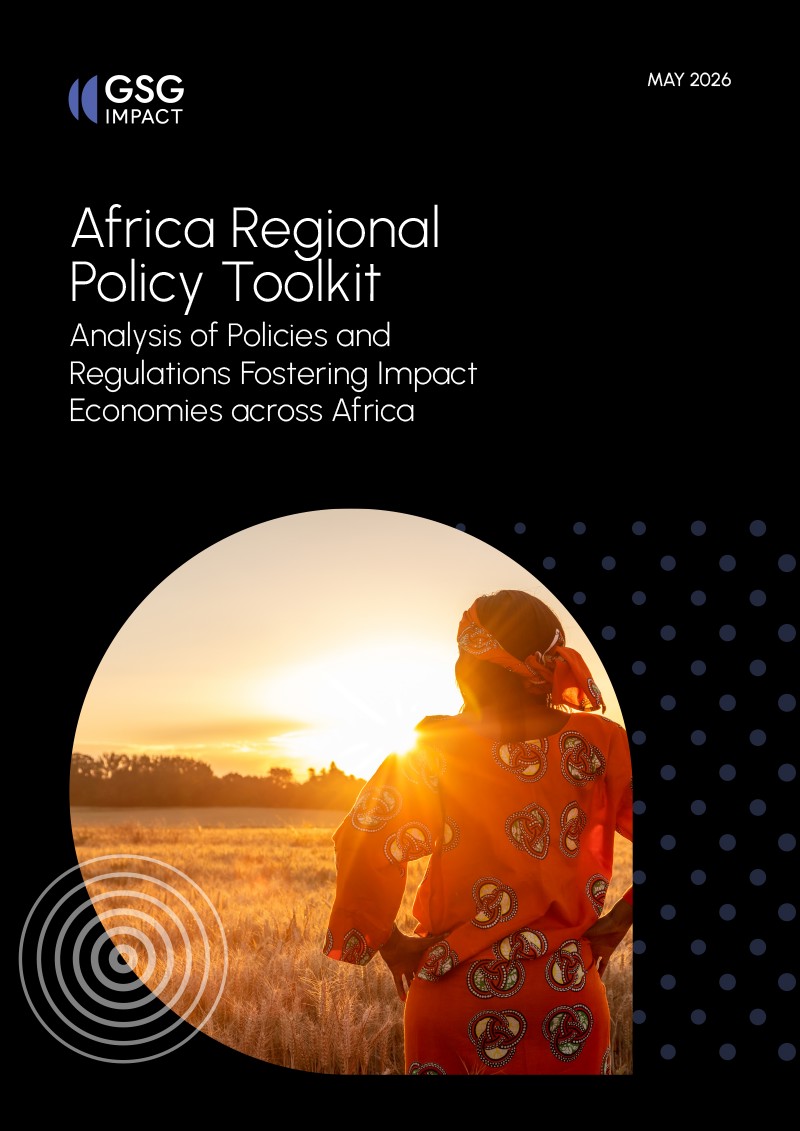
Our policy toolkit for Africa highlights that the primary constraint to mobilising impact capital in Africa is not investor appetite, but gaps in policy and regulatory infrastructure, and sets out reforms that can overcome them.
Alongside, this, our national roadmaps for Burkina Faso, Côte d’Ivoire, Ethiopia, and Senegal identify tailored policy and regulatory reforms needed to advance impact economies in each country.
Many SMEs, particularly in developing markets, are not set up with the resources, data systems and technical processes to deliver against sustainability reporting requirements designed around the operating realities of large corporations in developed markets. Our report Tapping into value chains: finds that corporations can improve their own risk management, access to finance, and brand by supporting their SME suppliers to measure, manage, and report on impact; and guides them on how to do so.
The GSG Impact Partnership is a global network of 43 National Partners representing 48 countries: more than half in emerging markets. By bringing the collective expertise of our National Partners to global discussions, we combine local leadership with international influence.
At the 4th International Conference on Financing for Development (FFD4) in Seville, our recommendations (developed with more than 50 organisations, including all National Partners)were reflected in the final Sevilla Commitment: to support and invest in domestic initiatives, expand de-risking tools, and foster greater impact transparency.
At the 9th Tokyo International Conference on African Development (TICAD 9),alongside our Ghana, Kenya, and Zambia National Partners, we engaged Japanese stakeholders including Japan International Cooperation Agency (JICA), the Japanese Financial Authority, and Mizuho Bank around investment opportunities in agriculture, climate adaptation, renewable energy, and financial services across Africa.
Ahead of the G20 Johannesburg summit, our South Africa National Partner issued recommendations for DFI mandate reform, country-led just transition planning to be paired with global technical and financial support, and harmonised, mandatory impact reporting.
Ecosystem development in Burkina Faso has led to the country formally joining the GSG Impact Partnership as a National Partner. Meanwhile Côte d’Ivoire, Senegal, and Ethiopia have all established Taskforces to progress toward National Partner status. Of the six target countries in this initiative, Ghana and Zambia have been GSG National Partners since 2019,while across Africa GSG National Partners are also present in South Africa, Nigeria, and Kenya.
Report
Analysis of Policies and Regulations Fostering Impact Economies across Africa
Publications
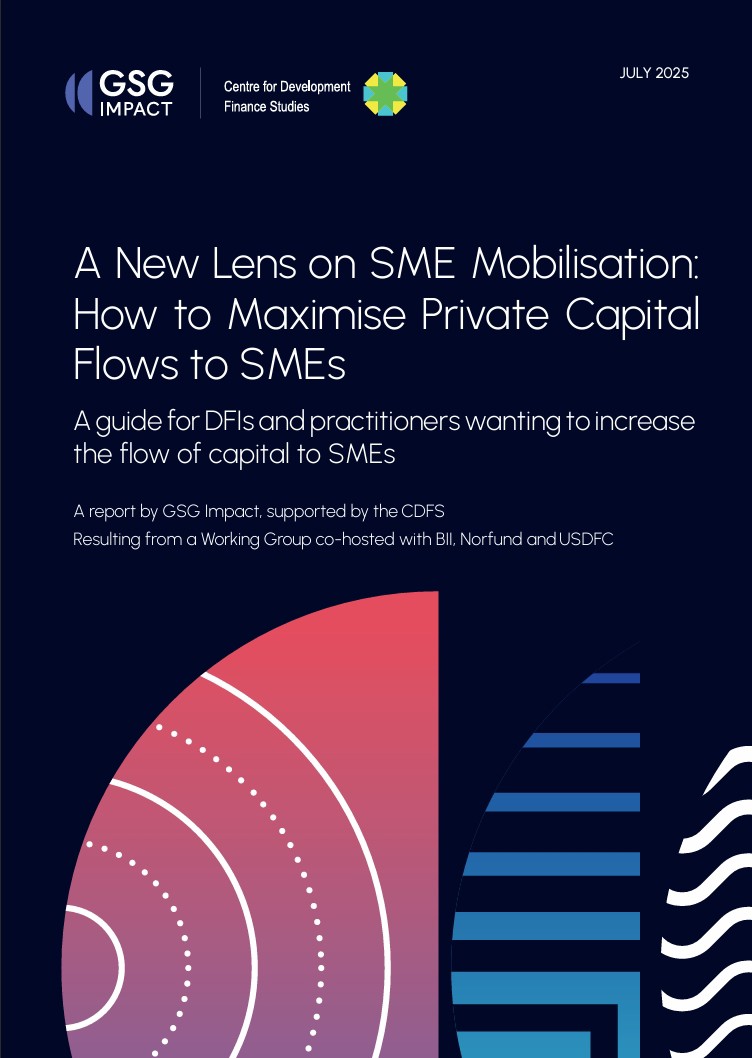
A guide for Development Finance institutions (DFIs) and all practitioners wanting to increase the flow of capital to SMEs in emerging markets and developing economies (EMDEs).
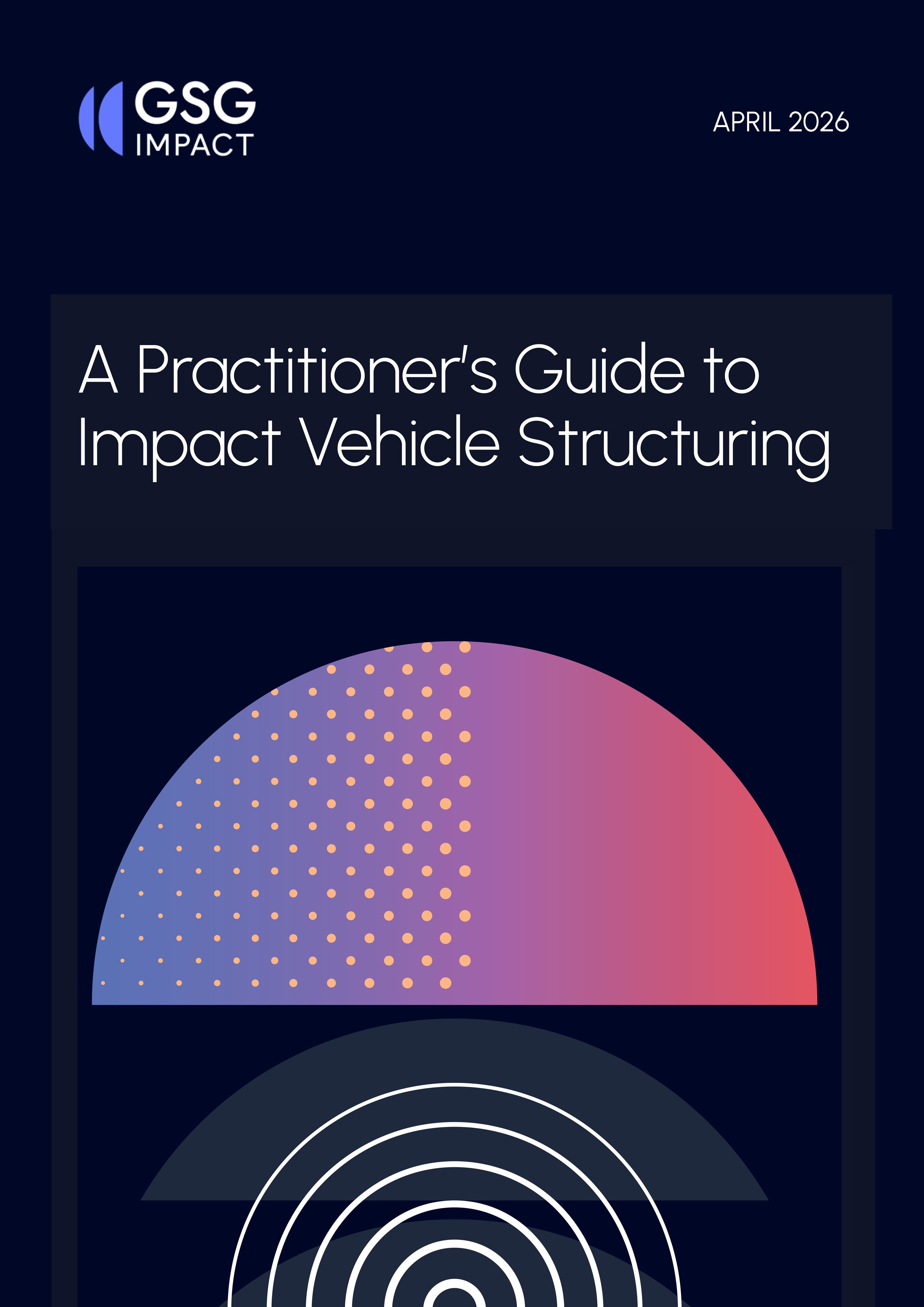
This guide aims to demystify the process of designing and structuring impact vehicles. It provides practical, replicable guidance for organisations seeking to catalyse capital flows into local impact economies. Drawing on lessons from across the GSG Impact Partnership and wider impact investing ecosystem, it presents a structured six-step roadmap to support practitioners throughout the vehicle design process, complemented by a library of case studies sharing practical lessons and real-world structuring experience.
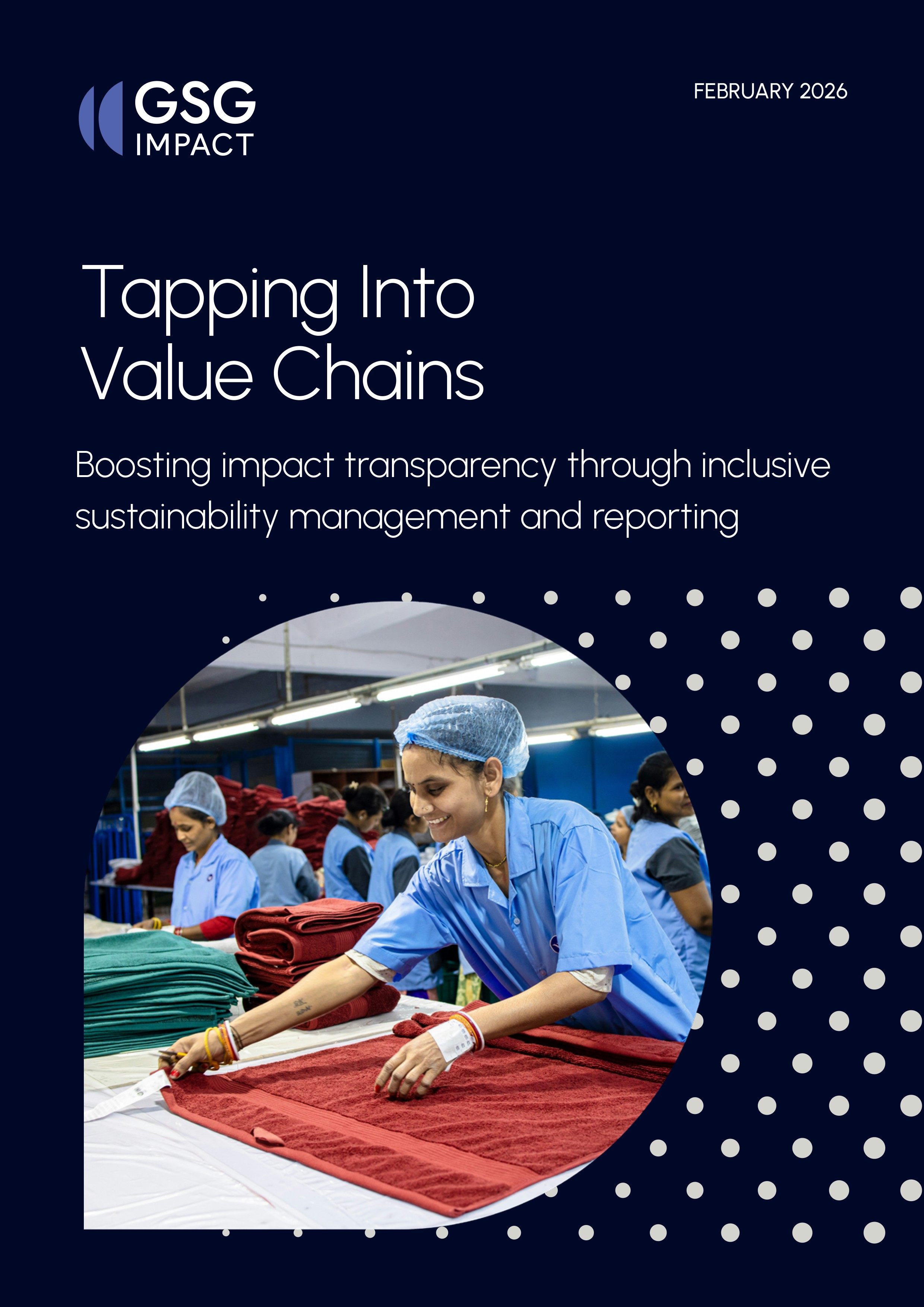
Sustainability management and reporting, understood as the processes by which companies identify, measure, monitor, and disclose their material environmental, social, and governance risks, opportunities, and impacts, has become increasingly essential to how businesses build competitiveness, resilience, and trust in today’s economy. At the same time, sustainability management and reporting are a critical foundation for system-level impact transparency, particularly when adopted consistently across value chains. Yet for most small and medium enterprises (SMEs)—especially in emerging markets and developing economies (EMDEs)—the business case remains unclear, and the pathway to implementation often feels out of reach. Limited resources, capacity and technical know-how, combined with emerging sustainability-related reporting requirements designed primarily for large corporations, make it difficult for SMEs to engage meaningfully.
No Content Set
Exception:
Website.Models.ViewModels.Blocks.SiteBlocks.CookiePolicySiteBlockVm