GSG Impact Summit 2027
2nd March 2027 | 09:00 CET | The Hague, the Netherlands



Africa Regional Policy Toolkit
Analysis of Policies and Regulations Fostering Impact Economies across Africa
In partnership with Japan’s Ministry of Foreign Affairs, GSG Impact has developed a Regional Policy Toolkit for Africa to strengthen impact economies and foster enabling policy environments across the continent.
Africa faces an annual SDG financing gap of $1.3tn – equivalent to 42% of the continent’s GDP. Traditional aid and public revenues cannot close this gap. Yet more than $1.57tn in global impact capital is actively seeking destinations that generate both financial returns and measurable social or environmental outcomes. The primary barriers preventing that capital from reaching African markets relate to the absence of policy and regulatory infrastructure, not investor appetite.
This toolkit analyses how nine African governments, Burkina Faso, Côte d’Ivoire, Ethiopia, Ghana, Kenya, Nigeria, Senegal, South Africa and Zambia, can use 14 policy tools across three government roles to build the infrastructure of an impact economy. The impact economy, as defined by GSG Impact, is an economic system in which measurable social and environmental outcomes sit at the core of every investment, business, and government decision, ultimately creating resilient economic growth in an inclusive and environmentally responsible manner.
The findings are grounded in country-level evidence and shaped by one overarching observation: the tools are mostly known, the capital exists and the precedents are established. What varies is the institutional capacity and policy coordination needed to develop an impact economy.
Publications
Insights
In a context shaped by interconnected crises - it is becoming increasingly clear that business management models based solely on financial indicators fail to adequately reflect the real costs and benefits borne by society. Stakeholders, are increasingly demanding information that enables them to understand the social and environmental value they create or destroy across their operations and value chains. It is within this context that the Impact Accounting Pilot in Colombia was developed, as an applied, decision-oriented exercise designed to generate practical evidence on the feasibility and strategic usefulness of these methodologies within the Colombian business context.
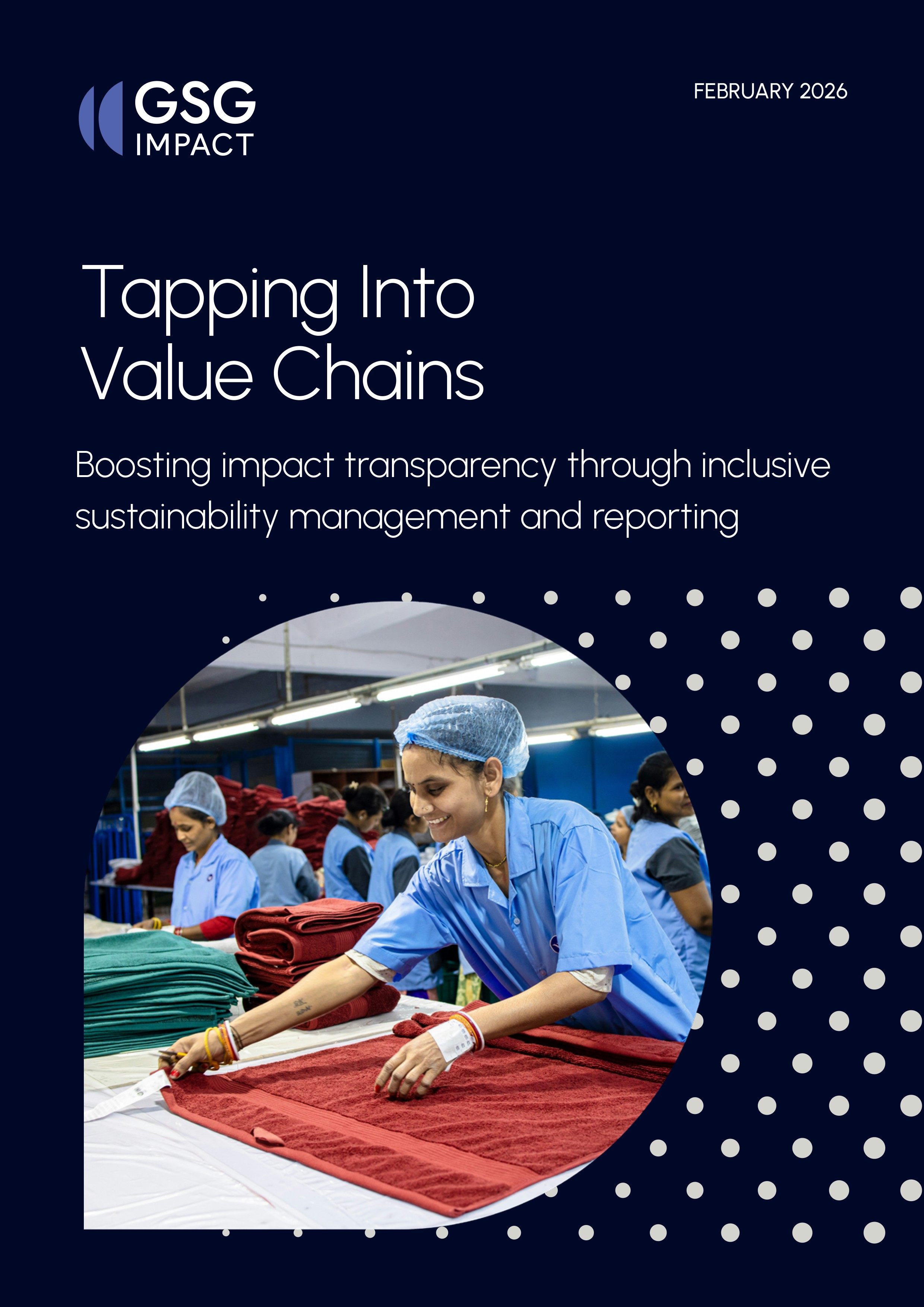
Sustainability management and reporting, understood as the processes by which companies identify, measure, monitor, and disclose their material environmental, social, and governance risks, opportunities, and impacts, has become increasingly essential to how businesses build competitiveness, resilience, and trust in today’s economy. At the same time, sustainability management and reporting are a critical foundation for system-level impact transparency, particularly when adopted consistently across value chains. Yet for most small and medium enterprises (SMEs)—especially in emerging markets and developing economies (EMDEs)—the business case remains unclear, and the pathway to implementation often feels out of reach. Limited resources, capacity and technical know-how, combined with emerging sustainability-related reporting requirements designed primarily for large corporations, make it difficult for SMEs to engage meaningfully.
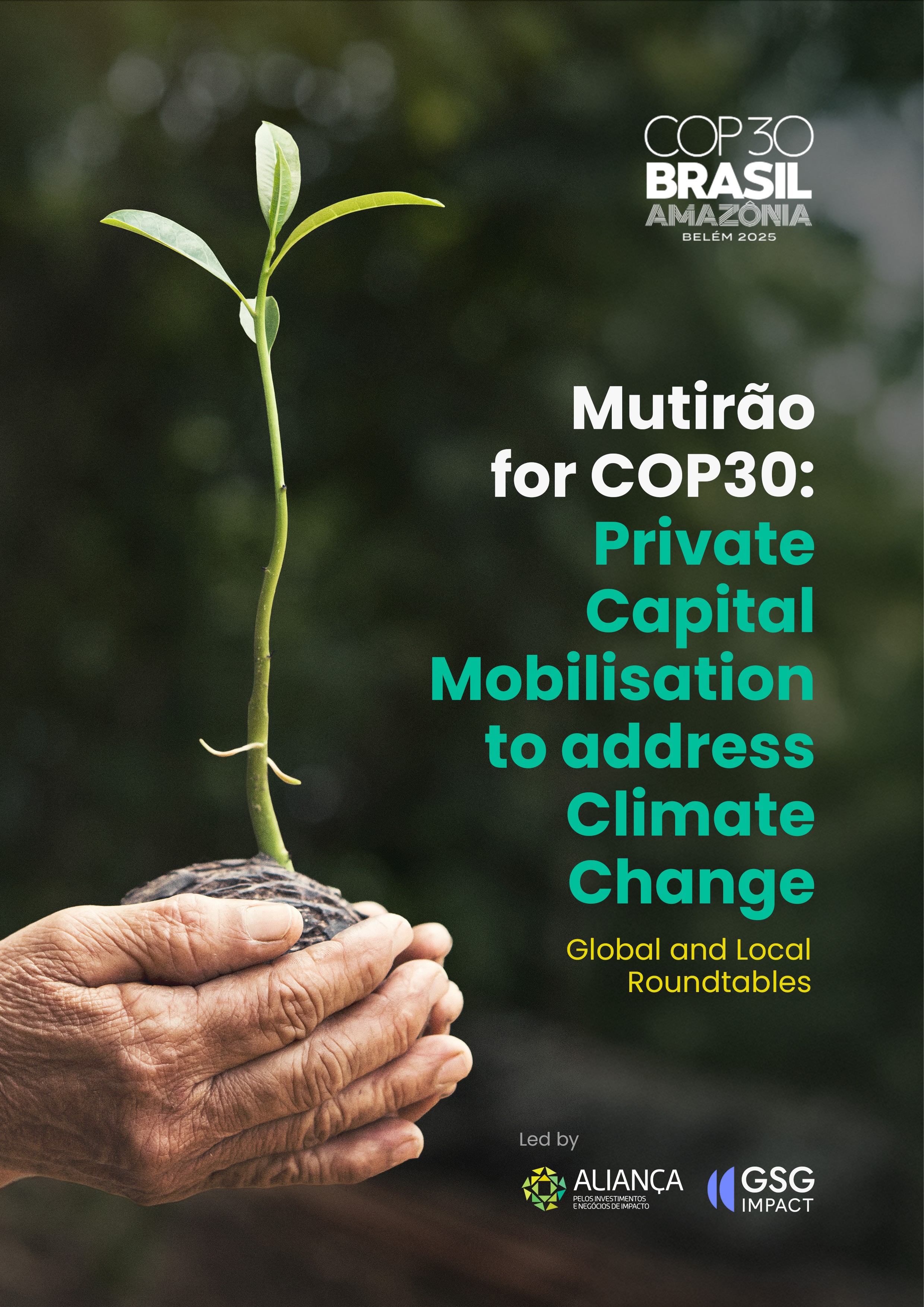
In the lead-up to COP30 in Brazil, GSG Impact, Aliança pelo Impacto and the Principles for Responsible Investment convened asset managers, asset owners, development banks, and policymakers to identify critical barriers and breakthrough actions needed to scale emerging market investment in climate change mitigation, nature-based solutions, and climate adaptation and resilience. This report synthesises the main takeaways across the global and local roundtables: the importance of regulations and taxonomies harmonization, the central role of blended finance and risk mitigation instruments, and the need for national and subnational project aggregation platforms.

No Content Set
Exception:
Website.Models.ViewModels.Blocks.SiteBlocks.CookiePolicySiteBlockVm