GSG Impact Summit 2027
2nd March 2027 | 09:00 CET | The Hague, the Netherlands



From fragmentation to alignment – building impact economies
Elizabeth Boggs Davidsen
Chief Executive Officer - GSG Impact
Dear colleagues,
In the last 12 months, the world has turned upside down. Public budgets in many advanced economies looked inward, geopolitical tensions between countries rose, and many developing countries are spending more on servicing debt than on education and health.
Our current economic system is failing to meet the moment.
In this context, it is even more of an honor – and an even greater responsibility – to lead GSG Impact.
In 2025, GSG Impact continued to show that policy and markets can align for the public good. As Sir Ronald Cohen explains in his new book, a “paradigm shift” is possible.
One bright spot this year is that impact investing has moved from value signaling to value creation. Impact is now “what customers want,” noted our Board Chair Nick Hurd. And research demonstrates that pursuing positive impact need not compromise return expectations. In many cases, impact investments outperform traditional ones.
With more than US$1.5 trillion invested in impact, impact is growing, driven by risk management, fiduciary duty, and lower market sensitivity. Our 2025 Traction and Trends Report reinforced this, showing meaningful gains in capital supply and demand, financial intermediation, and market-building.
Another 2025 highlight is the rise of local leadership. Earlier in my career, I designed development projects. Many were impact investments. We would parachute into a developing market, structure a deal, and perform annual reviews to see if it was turning a profit and benefiting people. What we learned in the last 15 years is clear: the deals that succeed are supported by local policies and an ecosystem that sees the value of a triple bottom line.
This year, our National Partners across the 48-country GSG Impact Partnership, advanced impact policies – driving the legislation, market incentives, and economic infrastructure that align capital flows with social and environmental outcomes.
One example is the UK’s new Office for the Impact Economy. Located in the Cabinet Office at the heart of government, it offers a central point of contact for investors, purpose-driven businesses, and philanthropists. The office will also advance the new Better Futures Fund, the world’s largest social outcomes fund that’s expected to mobilize up to £1 billion to support vulnerable children.
Governments across the world are exploring similar strategies to embed impact policy into economic planning. In Ghana and Zambia, local partners have continued reforms to mobilize domestic capital and strengthen pipelines for intermediaries and small enterprises. These moves show how governments are treating impact as a driver of competitiveness and resilience.
A final sign of progress is impact policy’s ability to transcend politics. In an increasingly polarized world, there remains a shared desire for accountability, efficiency, and doing more with each taxpayer dollar.
From fragmentation to alignment – building impact economies
Elizabeth Boggs Davidsen
Chief Executive Officer - GSG Impact
The European Commission’s explicit recognition of impact investing within the revised Sustainable Finance Disclosure Regulation (SFDR) is one example of governments finding agreement despite diverging politics. Impact policy can be the unity in the chaos.
Looking ahead to 2026, GSG Impact will be developing the Impact Economy Index – a new global benchmark to measure, compare, and accelerate how countries enable impact across their economic systems.
As many of us prepare to log off for holidays, let’s remember the power of partnerships. When partners work together to align capital and policy, we can do more than develop an impact investment. We can develop impact economies.
That is the future we are building at GSG Impact.
Happy holidays,
CEO, GSG Impact
27 January, 2026
17 December, 2025
2 December, 2025
19 November, 2025
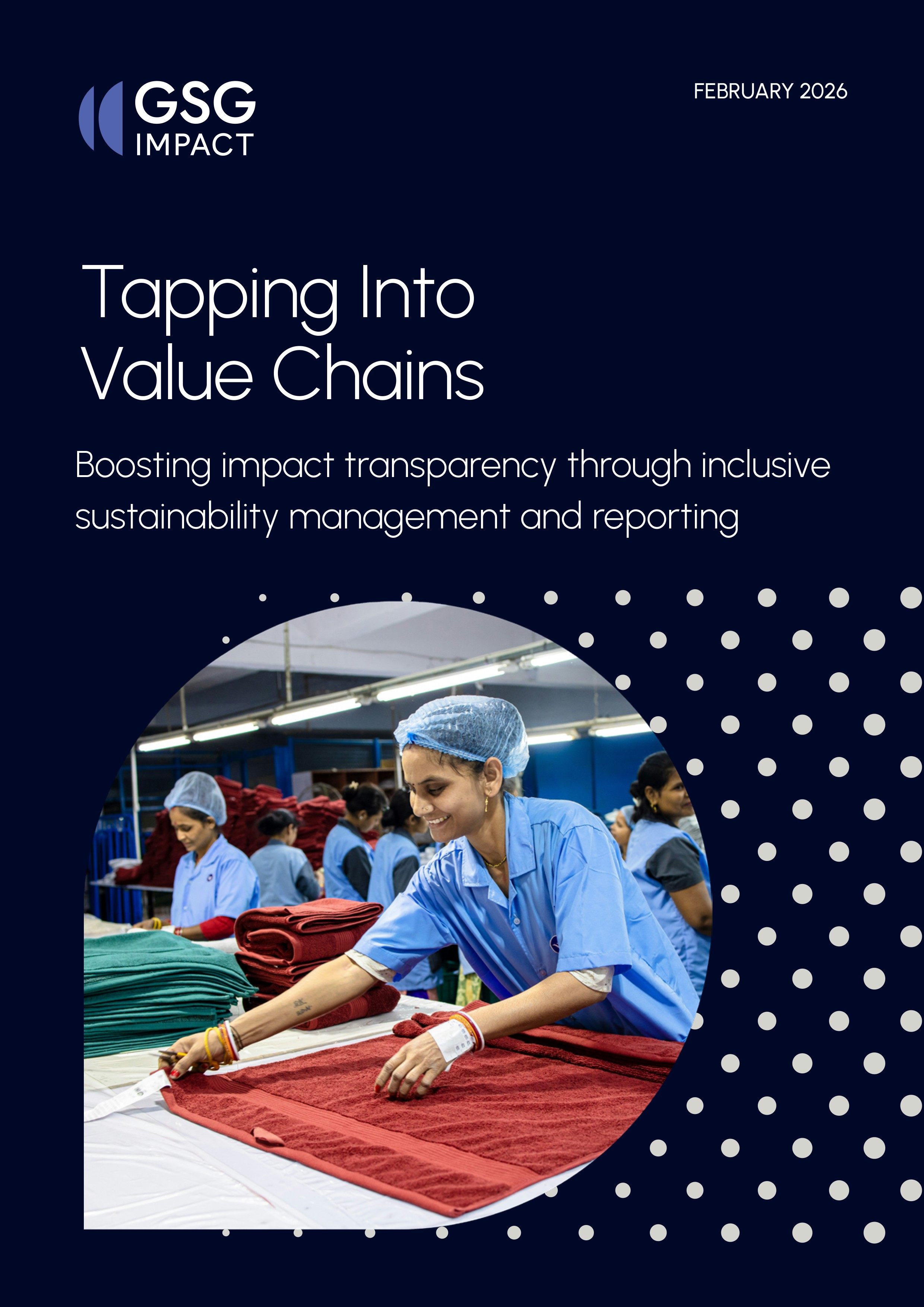
Sustainability management and reporting, understood as the processes by which companies identify, measure, monitor, and disclose their material environmental, social, and governance risks, opportunities, and impacts, has become increasingly essential to how businesses build competitiveness, resilience, and trust in today’s economy. At the same time, sustainability management and reporting are a critical foundation for system-level impact transparency, particularly when adopted consistently across value chains. Yet for most small and medium enterprises (SMEs)—especially in emerging markets and developing economies (EMDEs)—the business case remains unclear, and the pathway to implementation often feels out of reach. Limited resources, capacity and technical know-how, combined with emerging sustainability-related reporting requirements designed primarily for large corporations, make it difficult for SMEs to engage meaningfully.
Cómo los gobiernos de América Latina pueden impulsar el desarrollo sostenible a través de la Economía de Impacto. En este artículo, el colectivo GSG LATAM explora cómo los gobiernos pueden impulsar las economías de impacto a través de la política pública y comparte ejemplos que ya están transformando el panorama en América Latina. El documento se apoya en el reporte “Towards Impact Economies: Aligning Government Action and Private Capital for Public Good: A Policymaker’s Toolkit”, de GSG Impact.
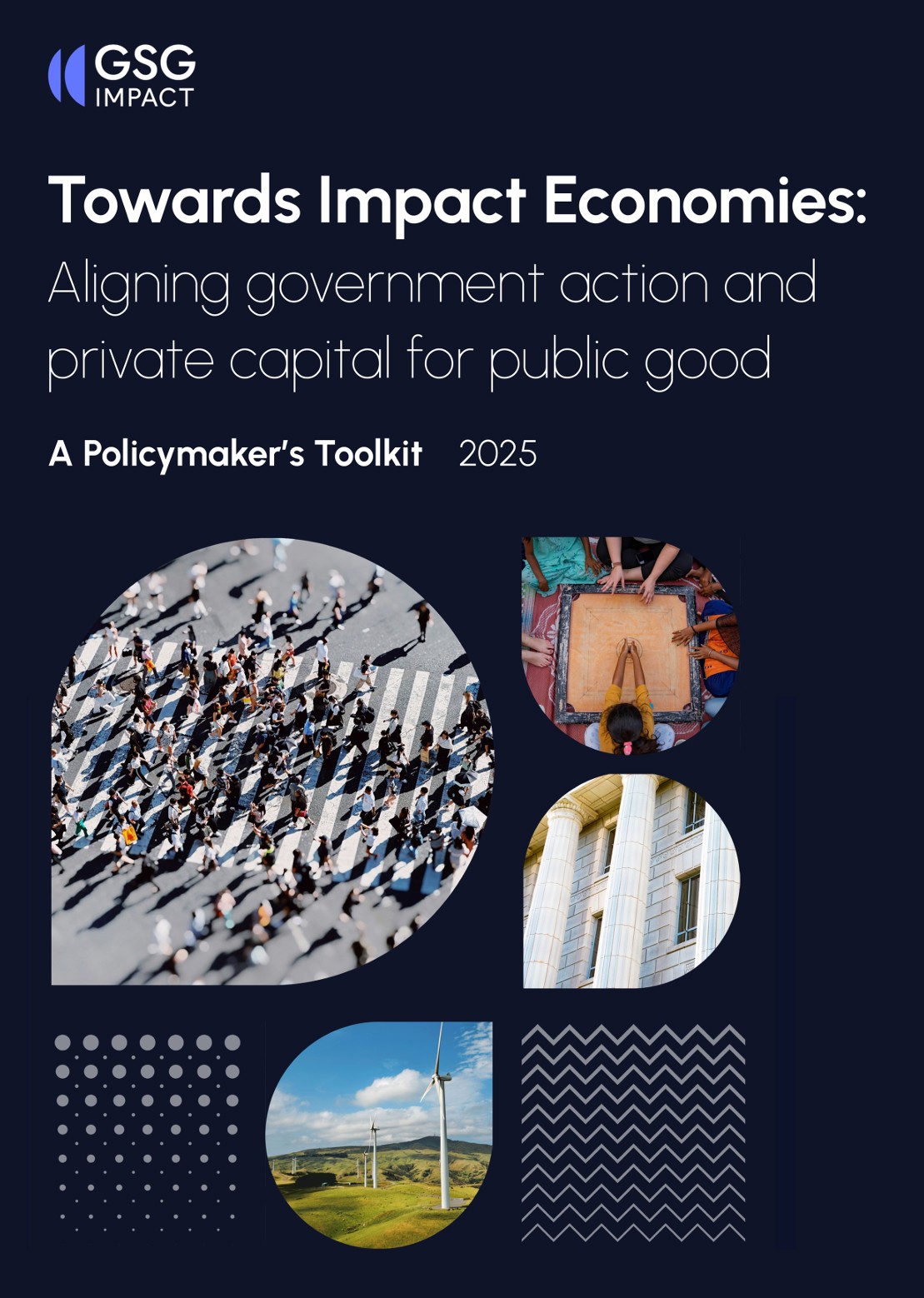
Governments play a pivotal role in unlocking trillions in capital to tackle global social and environmental challenges. This report shows how policy innovation, sustainable finance frameworks, and stronger public–private collaboration can bridge financing gaps—especially in emerging markets—and scale impact economies. Featuring proven global examples, it guides policymakers, investors, and public actors to align capital flows with long-term societal goals.


No Content Set
Exception:
Website.Models.ViewModels.Blocks.SiteBlocks.CookiePolicySiteBlockVm