GSG Impact Summit 2027
2nd March 2027 | 09:00 CET | The Hague, the Netherlands



Moving from impact deals to impact systems
Elizabeth Boggs Davidsen
Chief Executive Officer - GSG Impact
Dear colleagues,
Following a busy period of travel – to meetings in London, our annual gathering of the GSG Impact Partnership in Amsterdam, and then UN General Assembly and Climate Week NYC engagements – I report back that I have encountered a relatively upbeat tone.
In most places, I hear confidence and ambition about building impact economies. As we think about GSG Impact’s work ahead, key trends emerge.
Interest in developing impact economies is spreading. This is exemplified by Vietnam becoming the latest country to join the GSG Impact Partnership with several more countries in our pipeline.
Impact investing is going institutional. At our Global Leadership Meeting in Amsterdam, we heard from institutional investors working with our Dutch National Partner's target to allocate 10% of assets to impact investments.
An increasing number of investors are meeting the target – and many report that their 10% impact allocations match the other 90% of the portfolio on returns and diversification.
Meanwhile, growing interest is increasing funding for impact portfolios. This trend has resulted in pension funds becoming the largest source of impact capital, at 35% of impact dollars raised, with pension allocations having grown 47% a year since 2019.
However, it's not always easy.
Strong local leadership, awareness of local market conditions, and recalibrating impact investing perceptions with their actual risks are the key needs.
The role of domestic capital in emerging markets is accelerating this trend. The loss of international aid was a shock to the development ecosystem. On the bright side, it pushed markets to look at how they put the often-abundant capital within their own borders to more productive uses.
Pensions, sovereign wealth, savings, insurance, and dormant assets are all a growing part of the solution.
In Africa alone, domestic capital tops US$4 trillion. Yet much of it sits in government paper: Nigeria's pension funds hold more than half of their assets in government securities. Ghana’s Ci Gaba, West Africa’s first pension-backed fund-of-funds is a pioneering example of how to build the structures that allow domestic assets to fund domestic growth.
Impact accounting and transparency is gaining traction. Impact accounting combined with national policy initiatives have led to carbon pricing for 30% of global carbon emissions. This is one more step on our GSG Impact journey to impact-weighted financial accounting.
Climate adaptation and resilience are the next frontier. At the invitation of our Turkish National Partner, I joined the Bloomberg COP31 Business Forum in New York, where Mayor Bloomberg opened with the example of Nepal's glacier burst floods. Another flood hit Nepal last week.
These events highlight the urgent need for adaptation. Let’s all push for the upcoming COP31 to respond at the scale the climate crisis demands.
Adaptation investors lack bankable pipelines and trusted mechanisms for engaging with government, while governments often lack insight into what private capital needs to invest. The convening power of GSG Impact National Partners is well placed to help bridge that gap.
The bigger picture
We heard in Amsterdam about the challenge to pull impact deals together at scale across an economy. While it is worth celebrating when it happens, the deal-by-deal operating model is one we should all seek to change.
Our goal is to integrate impact into the system.
Policy change, institutional coordination, impact accounting and transparency, and incentives for capital deployment can take us from impact deals to impact economies.
Our upcoming Impact Economy Index is being designed to show what one looks like, and some of the paths to get there.
I hope you'll join us – for the launch of the Impact Economy Index and much more – at GSG Impact Summit 2027 in the Netherlands in March.
Sincerely,
Elizabeth Boggs Davidsen
CEO, GSG Impact
21 October, 2026
28 September, 2026
9 September, 2026
19 June, 2026
Publications
Insights
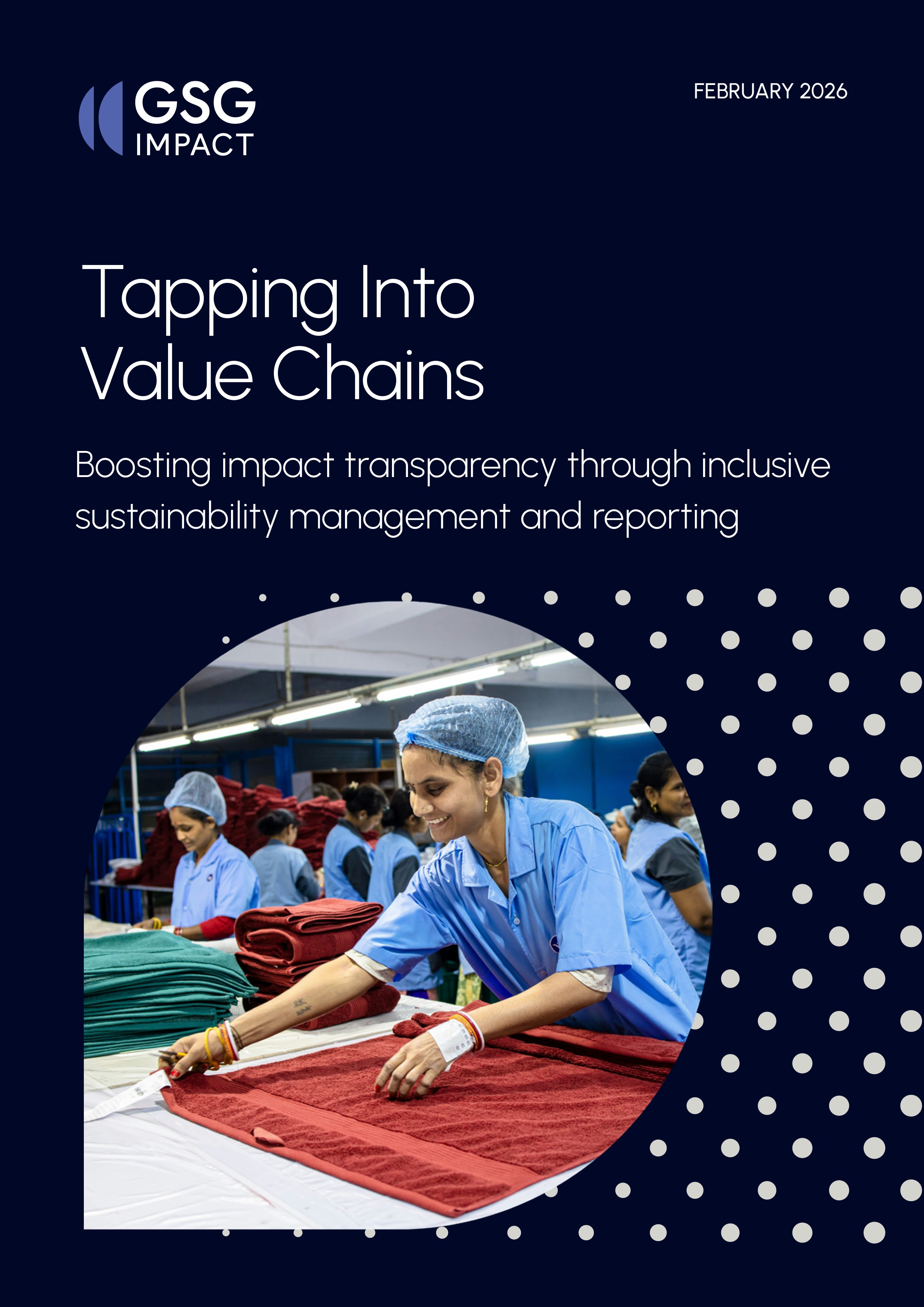
Sustainability management and reporting, understood as the processes by which companies identify, measure, monitor, and disclose their material environmental, social, and governance risks, opportunities, and impacts, has become increasingly essential to how businesses build competitiveness, resilience, and trust in today’s economy. At the same time, sustainability management and reporting are a critical foundation for system-level impact transparency, particularly when adopted consistently across value chains. Yet for most small and medium enterprises (SMEs)—especially in emerging markets and developing economies (EMDEs)—the business case remains unclear, and the pathway to implementation often feels out of reach. Limited resources, capacity and technical know-how, combined with emerging sustainability-related reporting requirements designed primarily for large corporations, make it difficult for SMEs to engage meaningfully.
Cómo los gobiernos de América Latina pueden impulsar el desarrollo sostenible a través de la Economía de Impacto. En este artículo, el colectivo GSG LATAM explora cómo los gobiernos pueden impulsar las economías de impacto a través de la política pública y comparte ejemplos que ya están transformando el panorama en América Latina. El documento se apoya en el reporte “Towards Impact Economies: Aligning Government Action and Private Capital for Public Good: A Policymaker’s Toolkit”, de GSG Impact.
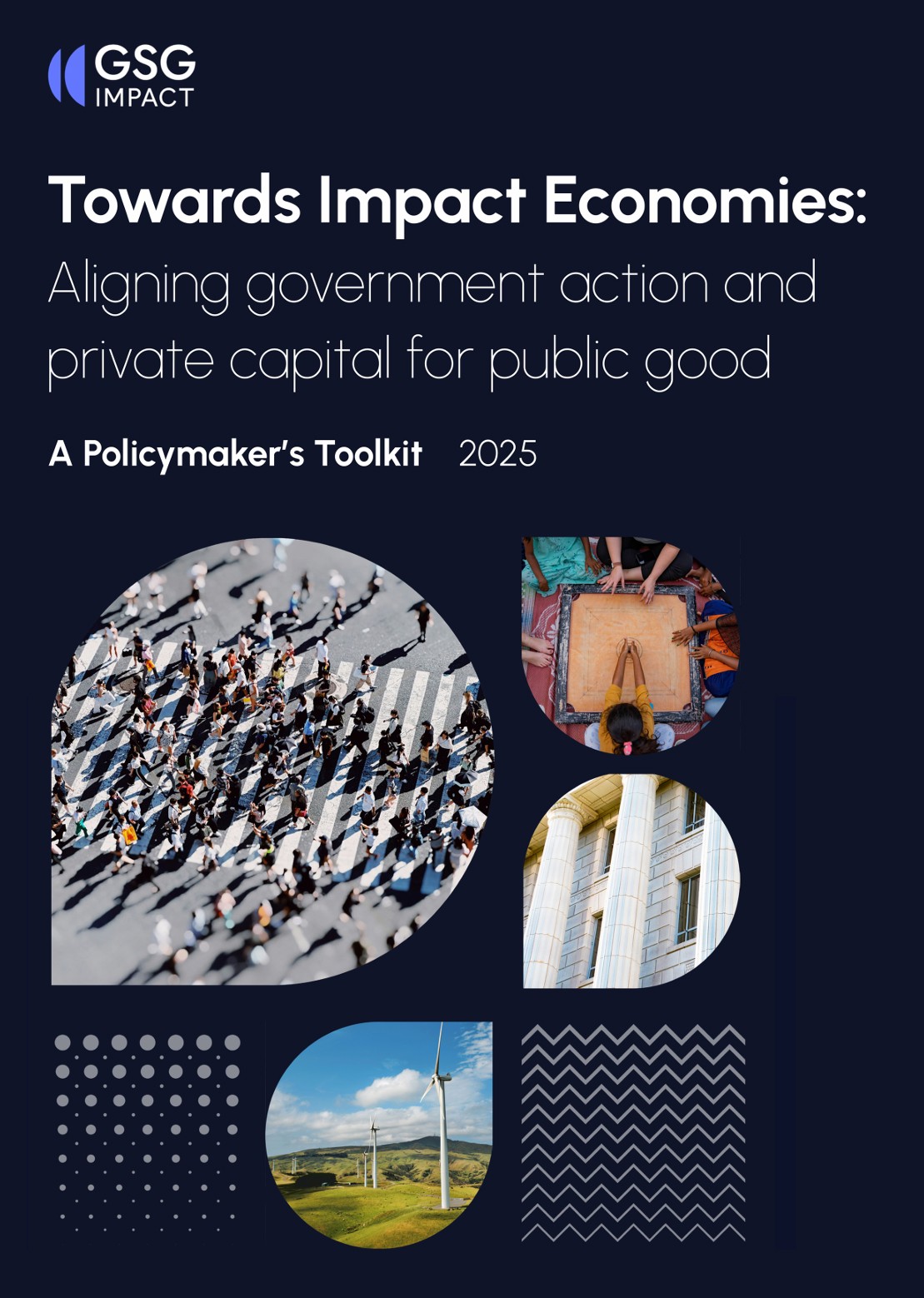
Governments play a pivotal role in unlocking trillions in capital to tackle global social and environmental challenges. This report shows how policy innovation, sustainable finance frameworks, and stronger public–private collaboration can bridge financing gaps—especially in emerging markets—and scale impact economies. Featuring proven global examples, it guides policymakers, investors, and public actors to align capital flows with long-term societal goals.


No Content Set
Exception:
Website.Models.ViewModels.Blocks.SiteBlocks.CookiePolicySiteBlockVm