GSG Impact Summit 2027
2nd March 2027 | 09:00 CET | The Hague, the Netherlands



What can we learn from turbulent times?
Elizabeth Boggs Davidsen
Chief Executive Officer - GSG Impact
Our premise continues to be simple: when impact policy exists, capital flows toward positive social and environmental outcomes.
Through our global network of National Partners, we have seen how policies such as sustainability reporting standards, pension reform, and procurement legislation can align incentives to solve public problems.
From France’s 90/10 solidarity funds creating a channel for social finance, to the UK’s Better Futures Fund mobilizing resources for vulnerable children, to Japan’s use of dormant assets, these frameworks demonstrate that impact and profit are mutually reinforcing.
Today, we also have examples of what happens when the inverse is true – when policy is not aligned with social and environmental outcomes. In Brazil, renewed investment in fossil fuels slows the transition to clean energy and increases environmental and fiscal risks. U.S. health cuts for low-income children and seniors are closing rural hospitals – setting back health outcomes and local economic activity. And globally, geopolitical tensions are contributing to energy price volatility and inflationary pressures that disproportionately affect the most vulnerable.
"We cannot afford to let this moment pass without developing lessons and equipping local leaders with clear examples of what works."
What can we learn from turbulent times?
Elizabeth Boggs Davidsen
Chief Executive Officer - GSG Impact
These moments underscore why impact policy matters – why it must be intentional, coordinated, and grounded in evidence. As part of this effort, we have launched the first phase of the Impact Economy Index, designed to systematically measure what good impact policy looks like, and to help countries benchmark progress and accelerate reform.
In the first quarter of 2026, I’ve been spreading this message across the impact ecosystem, with partners, at global gatherings and in the public conversation. Highlights you can catch up on include:
I talked to Devex about development finance trends in 2026, discussing the rise of domestic capital, and impact as a value driver, particularly in emerging markets.
I spoke to The Impact Equation podcast about my reflections on how impact policy has evolved over the past two decades, and where it is heading.
UK accountancy body ICAEW’s Corporate Financier magazine analysed how impact investing is outperforming traditional asset classes, while informing smarter public policy.
In ImpactAlpha I wrote about Canada as an example of growing impact leadership from middle powers, undeterred by traditional superpowers pulling back from climate and social issues.
GSG Impact Chair Nick Hurd join the SRI360 podcast to discuss why investors making easy choices, not bad choices, is the biggest challenge in driving more capital to where it is needed most.
We cannot afford to let this moment pass without developing lessons and equipping local leaders with clear examples of what works.
With appreciation,
Elizabeth Boggs Davidsen
CEO, GSG Impact
26 March, 2026
27 January, 2026
17 December, 2025
2 December, 2025
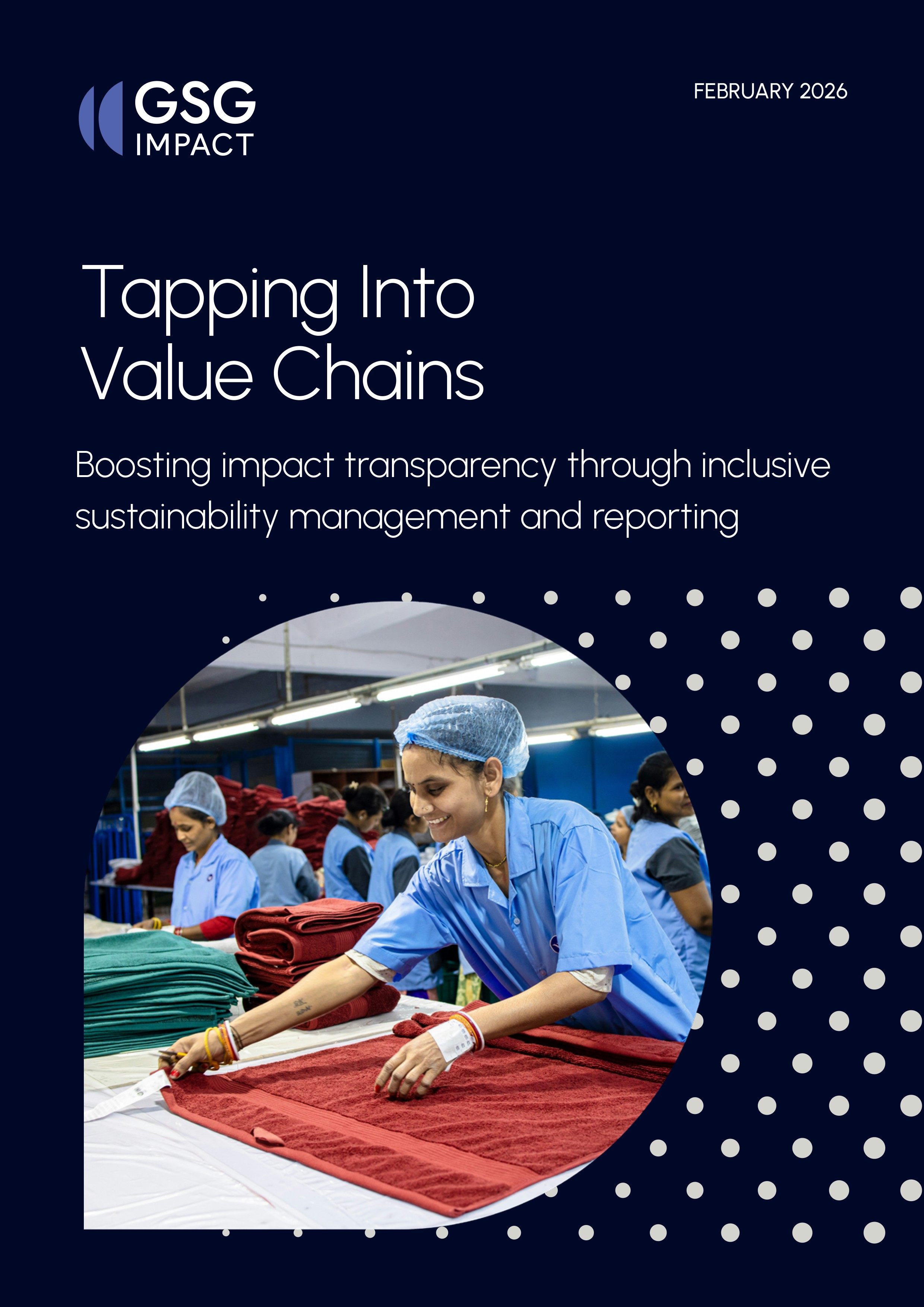
Sustainability management and reporting, understood as the processes by which companies identify, measure, monitor, and disclose their material environmental, social, and governance risks, opportunities, and impacts, has become increasingly essential to how businesses build competitiveness, resilience, and trust in today’s economy. At the same time, sustainability management and reporting are a critical foundation for system-level impact transparency, particularly when adopted consistently across value chains. Yet for most small and medium enterprises (SMEs)—especially in emerging markets and developing economies (EMDEs)—the business case remains unclear, and the pathway to implementation often feels out of reach. Limited resources, capacity and technical know-how, combined with emerging sustainability-related reporting requirements designed primarily for large corporations, make it difficult for SMEs to engage meaningfully.
Cómo los gobiernos de América Latina pueden impulsar el desarrollo sostenible a través de la Economía de Impacto. En este artículo, el colectivo GSG LATAM explora cómo los gobiernos pueden impulsar las economías de impacto a través de la política pública y comparte ejemplos que ya están transformando el panorama en América Latina. El documento se apoya en el reporte “Towards Impact Economies: Aligning Government Action and Private Capital for Public Good: A Policymaker’s Toolkit”, de GSG Impact.
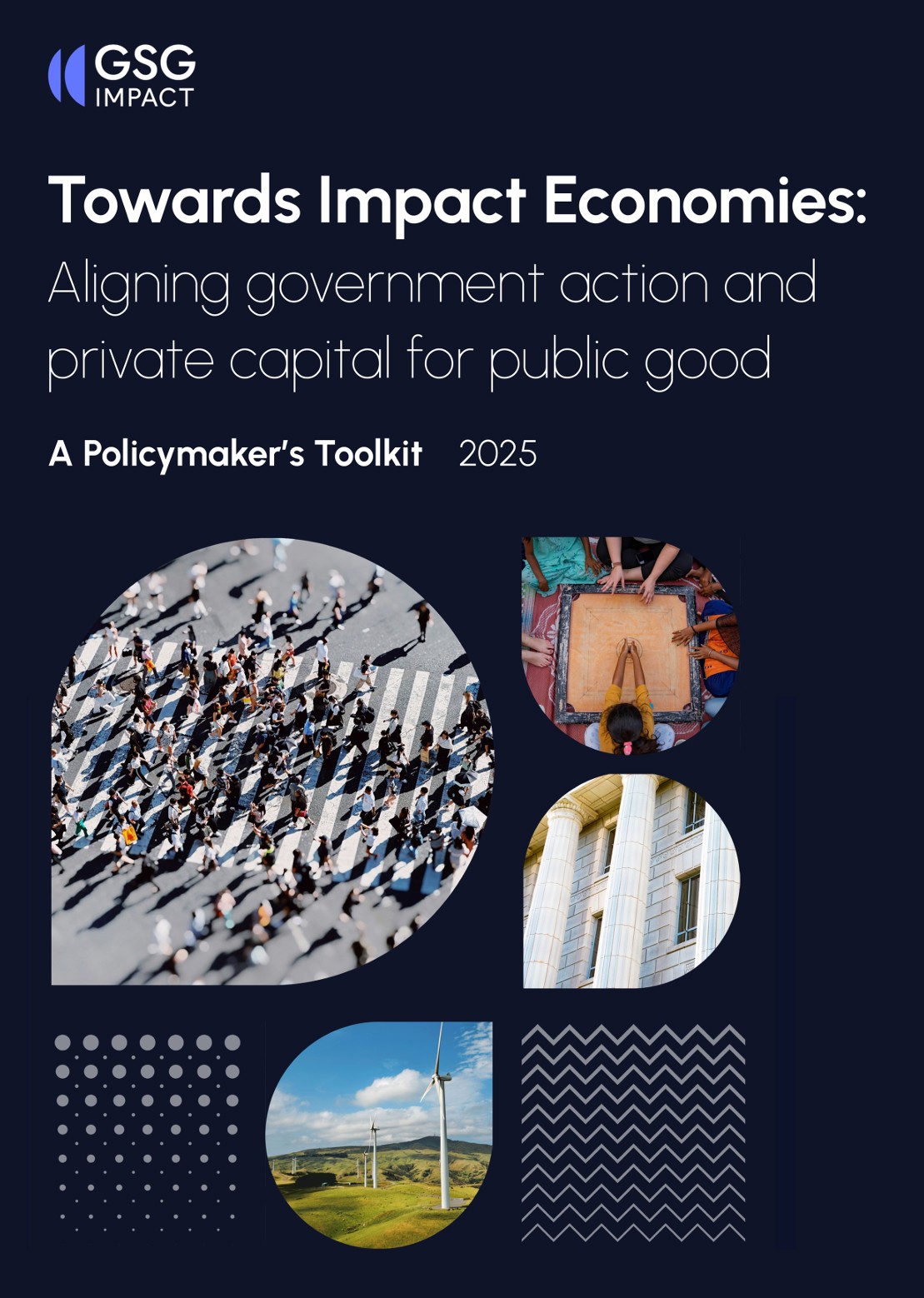
Governments play a pivotal role in unlocking trillions in capital to tackle global social and environmental challenges. This report shows how policy innovation, sustainable finance frameworks, and stronger public–private collaboration can bridge financing gaps—especially in emerging markets—and scale impact economies. Featuring proven global examples, it guides policymakers, investors, and public actors to align capital flows with long-term societal goals.


No Content Set
Exception:
Website.Models.ViewModels.Blocks.SiteBlocks.CookiePolicySiteBlockVm